Category: Banking

  • Swipe Right on Creator-First Banking: Here’s Why It’s a Match for 2025


    Let’s be honest: traditional banks weren’t built for the creator economy. They’re built for 9-to-5s, steady paychecks, and credit scores — not the vibrant, unpredictable, and fast-paced lives of creators, freelancers, and digital entrepreneurs.

    In 2025, with the creator economy projected to surpass $500 billion, it’s time creators start banking like it.

    1. 💸 Traditional Banks Don’t Understand Creator Income

    Creators don’t get paid every two weeks. You might get five brand payments in one month and zero the next. Unfortunately, traditional banks still judge your financial health based on outdated systems like W-2 income or credit scores — which often leaves creators overlooked or denied access to capital.

    Creator-first banks, like Bump, evaluate your income based on your actual content performance, deposits, and online presence — not just a credit report. That means more access, less judgment.

    2. ⏱️ Faster Access to Brand Payments = Peace of Mind

    Waiting 30, 60, or even 90 days to get paid by brands? That’s a creator’s nightmare. Creator-friendly banks are solving this by offering instant or accelerated payments, letting you get paid when you need it — not when a brand finally gets around to it.

    With Bump, for example, creators can ditch the chase and get what they’ve earned — fast.

    3. 📊 Know Your Market Value

    One of the most empowering features of creator-focused platforms is real-time insight into your market value. How much should you be charging for a sponsored post? A YouTube collab? A TikTok campaign?

    Banks that understand creators help you answer those questions with data-backed tools that help you charge what you’re worth — not guess what you think you’re worth.

    4. 🌱 Build Wealth Like a Business

    You’re not just an influencer — you’re a business. Creator-friendly banks offer more than just checking and savings accounts. They help you:

    • Earn interest on your deposits
    • Get funding to grow your brand
    • Set up automated savings or tax buckets
    • Access investment opportunities that work for your lifestyle

    It’s time creators started building long-term wealth, not just one-time brand checks.

    5. 🧘 Less Stress, More Freedom

    Financial anxiety is real. In fact, over 60% of creators report feeling stressed about income inconsistency. When you bank with a platform that understands your world, you feel more in control, more supported, and more confident in your growth.

    In 2025, creators are more powerful than ever — but your bank should be just as powerful, too.

    Creator-focused banks are built for your world, your work, and your dreams. Whether it’s faster payments, better funding options, or financial tools made for your business model — choosing a platform that “gets it” isn’t just smart… It’s essential.

    👉 Ready to bank like a creator? Check us out — we’re built by creators, for creators.

  • Bump Raises $3 Million To Help Creators Build Wealth


    James Jones’ father was an engineer. He was also a musician and a preacher, performing at churches along the East Coast.

    Jones, an entertainment lawyer, noticed his father often worried about keeping track of the money he collected while performing at church, and artists and influencers were often complaining about the same things.

    “I also often had creators complain about the lack of ownership over their creative assets and how painful it was to get loans, mortgages, or generally create generational wealth opportunities for themselves and their families,” Jones told TechCrunch.

    Jones said the pandemic brought forth a new set of challenges for creators: So many of them were at home trying to figure out how they would earn money and what to do next.

    His solution was Bump, a platform that helps creators manage and grow their businesses. He launched it in 2020 with Anton Kovalyov, who now serves as CTO. On Tuesday Bump announced a $3 million seed round, with investments from ImpactX, Capitalize and Serac Ventures.

    Bump allows creators to track income and market value, which can help them negotiate better deals and see how much money they are owed from partners. In 2022, Bump launched the Bump Creator credit card in partnership with Mastercard, which provides no monthly or hidden fees and can be acquired without a credit check. Bump also works with a banking institution and has direct deposit accounts that let creators earn interest on cash placed in its money market account.

    Jones said fundraising for his company was brutal. Bump was up against numerous factors it simply couldn’t control, like a bear market and the lack of investor appetite for creator economy companies. “We took no after no from investors on the chin and lived to keep fighting,” he said. “We weren’t afraid to ask for investment, and we weren’t afraid of being ghosted, being judged or being told no.”

    Bump closed its seed round in about six months, with other investors, including Heirloom Ventures, H/L Ventures and Mana Ventures. It has raised $3.5 million to date, with existing investors, including Snap Inc. and Sixty8 Capital.

    “The creator economy is one of the most important trends in the future of work,” Oliver Libby, a managing partner at H/L Ventures, told TechCrunch. “There is virtually no financial infrastructure, no financial training, products, or help for this growing population — many of them underrepresented and underbanked.”

    Bump will use the latest fundraise to help it expand and refine its infrastructure.

    Creating a company like Bump has always been Jones’ passion, even though he didn’t always want to be a founder. “I always had a burning desire to solve the world’s problems,” he said. He liked talking to people, listening to what they were saying, and analyzing details that could help make them “healthier, wealthier, or happier.”

    “I can’t say that I always wanted to be a founder, but I do think my natural tendencies and characteristics have pushed me toward being a founder,” he said. “And despite the highs and lows, I wouldn’t trade it for anything in the world.”


  • Is AI a blessing or a curse to the Creator Economy?

    Artificial Intelligence (AI) has emerged as a transformative force, revolutionizing various aspects of our lives. From powering smart assistants in our smartphones to enabling self-driving cars, AI has made remarkable advancements. However, the question remains: Is AI a blessing or a curse? This blog aims to explore the multifaceted nature of AI, delving into its potential benefits and ethical challenges. By examining both perspectives, we can gain a more nuanced understanding of the impact AI has on the creative industry.

    What is AI?

    The term AI stands for Artificial Intelligence. AI is a machine’s ability to perform the cognitive functions we associate with human minds, such as perceiving, reasoning, learning, interacting with an environment, problem solving, and even exercising creativity.

    AI in the creative industry is increasingly being discussed as it has started being used to automate many of the repetitive and time-consuming tasks involved in the creative process. Examples include making new beats or even creating a graphic design. By leveraging AI to complete these tasks, creators are able to focus more on innovative and creative work. This, in turn, speeds up the creative process and helps to reduce additional costs.

    What roles does AI play in its current development in the creative industry?

    Today AI is playing an increasingly significant role in the creative industry, revolutionizing the way artists work and pushing the boundaries of artistic expression. It is being welcomed more in the creative industry as its tools are being developed.

    Traditionally, creativity has been seen as a distinctly human attribute, but AI is challenging that notion by demonstrating its potential as a collaborator, tool, and source of inspiration for artists.

    One of the key contributions of AI to the creative industry is its ability to generate original content. Through techniques like generative adversarial networks (GANs) and deep learning algorithms, AI can create new and compelling artworks, music, poetry, and even screenplays. This opens up new avenues for artists to explore and experiment with novel ideas, styles, and concepts.
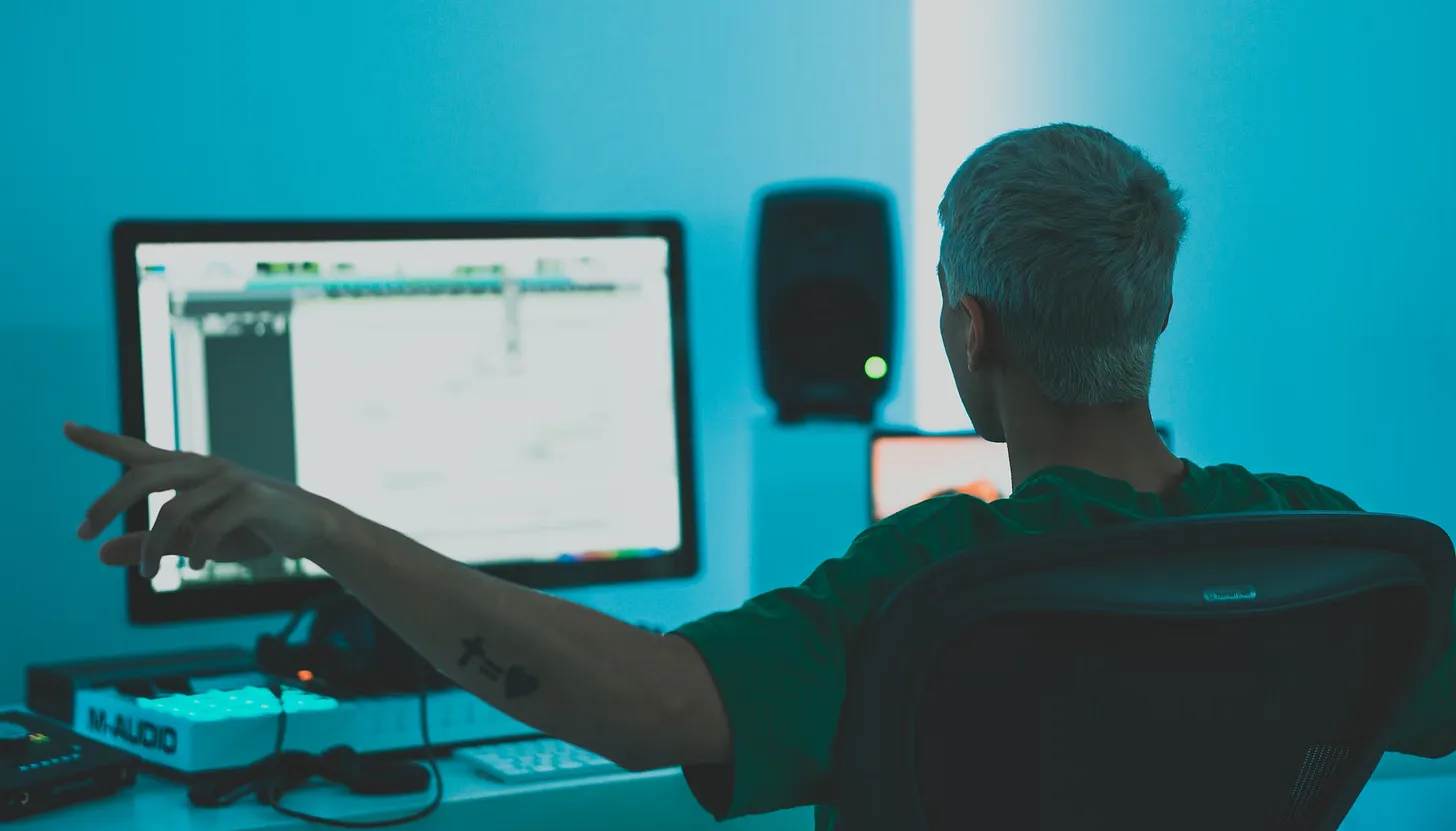
    AI also serves as a powerful tool for artists, providing assistance in various aspects of the creative process. For example, AI-based tools can analyze and interpret large volumes of data, allowing artists to gain insights into trends, patterns, and audience preferences. This knowledge can inform artistic decision-making, helping artists create work that resonates with their target audience.

    Erika Goldring/Getty Images; Clarence Davis/NY Daily News Archive via Getty Images; Clarence Davis/NY Daily News Archive via Getty Images

    For example, American music producer ‘Timbaland’ looks to embrace AI technology for music creation. As a leader in music production for decades, having gotten his break in the 1990s working with Aaliyah, Ginuwine, and of course Missy Elliot, Timbaland as an innovator seeks to embrace the new technology and legitimize its use in future creations. The mogul recently made headlines for disclosing his use of the new technology to recreate the voice of the deceased rapper, The Notorious B.I.G. for a track. Timbaland believes that there is the potential to preserve and continue the legacy of deceased artists. He also believes that integrating technology into art and music creation can be an incredible tool for producers.

    What challenges Is AI facing? 

    However, not everyone in the creative industry agrees with this innovation. While AI offers numerous opportunities for artists & creators, it also raises important questions and challenges. The notion of authorship becomes complex when AI algorithms are involved in the creative process. Ethical considerations surrounding ownership, attribution, and the potential for AI-generated content to devalue human creativity must be carefully addressed. A majority of the content is unlicensed, low-grade and raises legal and ethical questions.

    Recently, Drake and The Weeknd caused a debate & an uproar from their respective labels after a track “Heart on My Sleeve,” that claimed to use A.I. versions of their voices caused a major inconvenience. Although it generated popularity when it was first released back in April of this year, becoming a viral phenomenon on social media and racking up millions of plays across TikTok, Spotify, YouTube and more, it was removed within a week by Universal Music Group (UMG). Their labels & other representatives at play condemned the song for the reason of “infringing content created with generative AI”.

    So is AI a blessing or curse?

    Well if not monitored effectively it can be a curse. Complications may occur as this new technology crosses over into the mainstream consciousness of creators and consumers before the necessary legal rules are in place. An example of this was seen back in the early 2000s when Napster was shut down in 2001 after a successful court injunction was granted to the Recording Industry Association of America, on grounds of contributory and vicarious copyright infringement under the US Digital Millennium Copyright Act (DMCA). Despite this, the idea that songs could be downloaded, stored, and shared through networked computers had clearly caught on. AI is fundamentally transforming the creative industry by expanding the possibilities for artists and challenging traditional notions of creativity. By embracing AI as a collaborative tool and exploring its potential, artists can leverage its power to create innovative and captivating works of art. However, it is crucial to navigate the ethical implications and ensure that AI remains a tool that enhances human creativity rather than replacing it.

    Although harmless, innovative fun for most, corporations must continue to monitor A.I. models learning from, and then diluting, their copyrighted material. Currently, courts and lawmakers are only beginning to discuss questions of ownership when it comes to A.I., as copyrights in the creative industry can be complicated as it is. Protected intellectual property can only be created by humans, but what happens when musicians collaborate with machines? Can it be monitored?
    So what role does AI play now? 

    The role of AI in the music and creative industry is still very much gray although hopeful. AI plays a significant role in the creative industry, revolutionizing various aspects of music creation, production, distribution, and consumption.

    Creators like Holly Herndon, who has provided her own A.I. voice as a tool for other musicians — complete with a system for compensation — and created a company, Spawning, to build consent guidelines for A.I., sees that there can be magic in harnessing the future fairly and ethically. Herndon suggests that there is more opportunity in exploring this technology than trying to shut it down.

    For instance, music production and mixing, personalized music recommendations, music analysis and insights and remixing and mashups.

    While art like “Heart on My Sleeve” may quickly become a shifting cultural force for cases within AI, the unfamiliarity will eventually be exhausted. What will stand the test of time are the artistic possibilities when anyone can assume the creative production of someone/something else, even just for a second, as an expressive tool. All in an ethical, legal & non discriminating way of course.

    So in conclusion, the question of whether AI is a blessing or a curse cannot be definitively answered. While AI offers immense potential to revolutionize industries, enhance efficiency, and improve lives, it also presents a host of ethical challenges and risks. The responsibility lies with us to shape the development and deployment of AI in a way that maximizes its benefits while minimizing its drawbacks. Through thoughtful regulation, robust ethical frameworks, and ongoing dialogue between stakeholders, we can harness the power of AI as a force for good, ensuring that it remains a blessing rather than a curse.

  • Protecting Your Financial Data: Security Tips for Creators

    In today’s digital world, creators—whether they are artists, writers, influencers, or YouTubers—rely heavily on online platforms to share their work, engage with their audience, and manage their finances. However, with great connectivity comes great responsibility, especially when it comes to safeguarding your financial data. Here are some fun and creative tips to help you protect your financial information while continuing to create and thrive online.

    1. Password Prodigy: Craft Strong and Unique Passwords

    Think of your passwords as the enchanted keys to your financial kingdom. Use a combination of uppercase and lowercase letters, numbers, and special characters to create a unique password for each of your accounts. For instance, “P@intBrush_2024!” is much stronger than “password123”. You can also use a password manager to keep track of all these complex passwords without losing your mind.

    2. Two-Factor Fiesta: Enable Two-Factor Authentication (2FA)

    Two-factor authentication adds an extra layer of security by requiring not just a password but also a second form of identification, like a text message code or an authentication app. Imagine it as the double lock on your treasure chest. Even if someone gets hold of your password, they still need that second key to access your financial data.

    3. Phishing Phobia: Beware of Scams and Fake Links

    Phishing scams are like the digital world’s evil sorcerers, trying to trick you into giving away your valuable information. Be wary of emails, messages, or websites that ask for your financial details. Always double-check the sender’s email address and look for telltale signs of fake URLs. Remember, a bank or a legitimate financial institution will never ask for your password or personal information via email.

    4. Secure Sorcery: Use Encrypted Connections

    When accessing financial websites or making online transactions, ensure you’re using a secure, encrypted connection. Look for “https://” in the website’s URL and a padlock icon in the address bar. This encryption is like a magical shield that protects your data from prying eyes.

    5. Backup Buddy: Regularly Backup Your Data

    Imagine losing all your precious work and financial records overnight—horrifying, right? Regularly back up your data to an external hard drive or a secure cloud service. This way, even if your device gets compromised, you won’t lose your valuable information.

    6. Update Utopia: Keep Your Software Up to Date

    Outdated software is like a castle with crumbling walls—easy for attackers to breach. Keep your operating system, apps, and antivirus software up to date to protect against the latest threats. Enable automatic updates to ensure you’re always running the latest and most secure versions.

    7. Wi-Fi Wizardry: Secure Your Wireless Network

    An unsecured Wi-Fi network is like leaving your front door wide open. Protect your home network with a strong password and use WPA3 encryption if possible. Avoid using public Wi-Fi for financial transactions unless you’re using a virtual private network (VPN) to encrypt your connection.

    8. Creative Caution: Limit Sharing Personal Information

    As a creator, it’s tempting to share snippets of your life with your audience, but be mindful of oversharing. Avoid posting sensitive information like your home address, phone number, or financial details on social media. Keep your personal and professional lives separate to minimize risks.

    9. Monitor Magic: Regularly Check Your Accounts

    Keep a close eye on your financial accounts for any unusual activity. Set up alerts for transactions so you’re instantly notified of any suspicious behavior. Early detection is key to preventing financial loss.

    10. Educate and Empower: Stay Informed

    Cybersecurity is a constantly evolving field. Stay informed about the latest threats and best practices by following trusted sources and participating in online communities. Knowledge is your most potent weapon in the fight to protect your financial data.

    Final Thoughts

    As a creator, your financial security is just as important as your creative work. By following these tips and staying vigilant, you can protect your financial data and continue to share your talents with the world. Remember, the digital realm can be a wondrous place full of opportunities—just make sure you guard your treasure well!